The history of the Château Royal d'Amboise
From a family to a crown
For more than four hundred years the rock belonged to the powerful house of Amboise. In 1434 Charles VII confiscated it after its lord was convicted of plotting against him, and it became royal — which is how a provincial fortress turned into the favourite residence of the kings of France for the next century.
The Renaissance arrives
Charles VIII, born here in 1470, rebuilt on a grand scale and brought Italian craftsmen back from his Naples campaign. Louis XII continued. François I spent his childhood here and, as king, invited Leonardo da Vinci to the Clos Lucé down the road in 1516. For roughly fifty years Amboise is the centre of gravity of French court culture, which is out of all proportion to the size of the town. See the kings who lived here.
1560: the conspiracy
The court’s golden age ends badly. In 1560 a Protestant plot to seize the young François II and remove the Guise family from power was discovered; the reprisals were savage and public, carried out at the château in front of the court, with bodies displayed from the walls and the balconies. The court effectively abandoned Amboise afterwards, and it never recovered its position.
Why most of it is gone
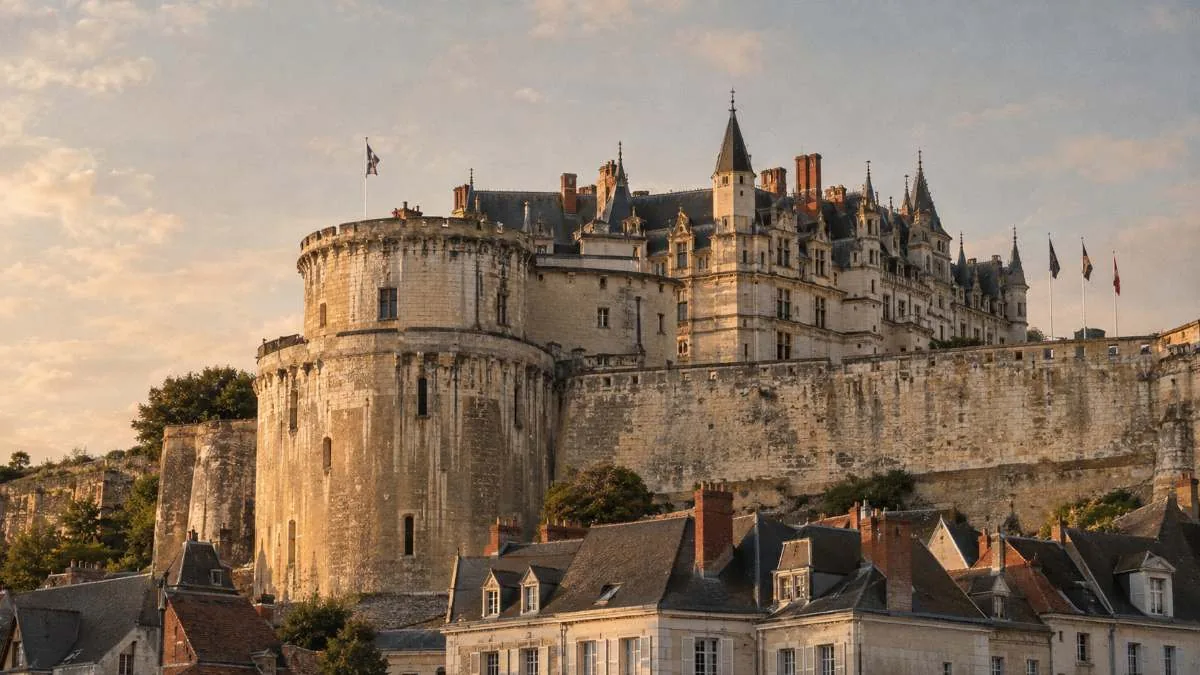
This is the part that explains your visit. After the Revolution the château passed through the hands of the state and then, under Napoleon, to Roger Ducos, who found himself owning an enormous and ruinous complex. From 1806 much of it was demolished — wings, galleries and the collegiate church of Saint-Florentin where Leonardo had been buried. What survived is the Logis Royal along the terrace, the Saint-Hubert chapel, the two ramp towers and the walls. The gardens you walk through stand on the footprint of everything else.
The nineteenth century and after
In 1848 the Emir Abd el-Kader, the Algerian leader who had resisted the French conquest, was held here with his household until 1852; several of his companions died and are buried in the gardens, and the ramp up to the entrance carries his name today. In 1874 Leonardo’s presumed remains were installed in the chapel. The château is now owned and run by the Fondation Saint-Louis: see who owns the château.
Use the HistoPad in the Logis Royal specifically to see the demolished wings. It is the only way to understand what the demolition took, and it turns the gardens from a pleasant lawn into the ghost of a palace: the HistoPad page.
Visiting
The whole history above sits inside one entrance ticket, bought at the gate.
A reminder: what you book above is the guiding, or a day that includes entry. The Château Royal d’Amboise has no online entrance ticket — you buy that at the château’s own desk, and its guided visits are included in it.
Frequently asked questions
When did Amboise become royal?
In 1434, when Charles VII confiscated it from the house of Amboise.
Why is so much of the château missing?
Most of it was demolished from 1806 onwards, including the church where Leonardo was first buried.
What was the Amboise conspiracy?
A Protestant plot of 1560 to seize François II, followed by public reprisals at the château. The court left Amboise afterwards.